A 1984 Reagan covert order on "technology modification": the first record of the plan to feed the Soviets sabotaged technology
In June 1984, a proposed presidential finding on "Technology Modification" went to Reagan and his senior advisers. A presidential finding is the President's written order authorizing a covert operation. This one has not been reported before. Its subject matches a disputed Cold War story: that the United States fed the Soviet Union sabotaged technology. Until now, that story rested on later accounts by participants and historians. The finding is the first official US document that points to the plan.
The story
In 1981 a KGB officer, Col. Vladimir Vetrov, codenamed Farewell, began passing files to French intelligence. The files listed Western technologies the Soviets were trying to obtain. According to the story, the United States then let the Soviets obtain altered versions, built to fail.
Three accounts tell it:
- Gus Weiss was a National Security Council staffer. He says he proposed the plan to CIA Director William Casey "on an afternoon in January 1982." He lists "contrived computer chips," "flawed turbines" on a gas pipeline and "defective plans." He adds: "When Casey told President Reagan of the undertaking, the latter was enthusiastic." His account is "Duping the Soviets: The Farewell Dossier," in the CIA journal Studies in Intelligence (1996).
- Thomas C. Reed, a former Secretary of the Air Force, adds the most famous result. In At the Abyss (2004), he says sabotaged control software blew up a Siberian gas pipeline in 1982.
- Derek Leebaert, in The Fifty-Year Wound (2002), describes a chip-testing machine let through to Soviet buyers in Rotterdam. After a delay, it began passing defective chips.
The dispute
The story's best-known result is contested from three directions.
- The explosion's cause. Vasily Pchelintsev headed the KGB in the Tyumen region in 1982. He has said a pipeline did burst that April, near Tobolsk. He blames two construction faults, not software, and says it was repaired in a day.
- The explosion's date and place. A 2013 CBC documentary, Bons baisers du Canada, places the blast in December 1983, near Nadym, not in 1982.
- The software itself. Reed says the software came through a Canadian firm; the CBC film names it as Cov-Can. A man identifying himself as a former Cov-Can employee wrote in 2013 that the software was rejected and never installed. He called it modeling software, unable to control the pipeline's pumps.
None of these rebuttals addresses whether the program existed. They attack its showcase result. But the program's existence has rested on accounts written a decade or more later.
What the new record adds
Three pages from the Ronald Reagan Presidential Library carry it.
- The minutes cover page for the National Security Planning Group, Reagan's senior national security advisers, on June 29, 1984. Its subject line: "Central America and Proposed Presidential Finding on Technology Modification."
- The RSVP list for the session itself, 11:45 to noon, "Chaired by President." Its subject line is narrower: "Proposed Finding on Technology Transfer Modifications." Technology transfer is the flow of Western technology to the Soviet Union. It is marked "PRINCIPAL ONLY," meaning cabinet-level members without aides.
- The library's withdrawal sheet, its list of withheld papers. It shows the agenda and the later pages of the minutes still classified as of 2007.
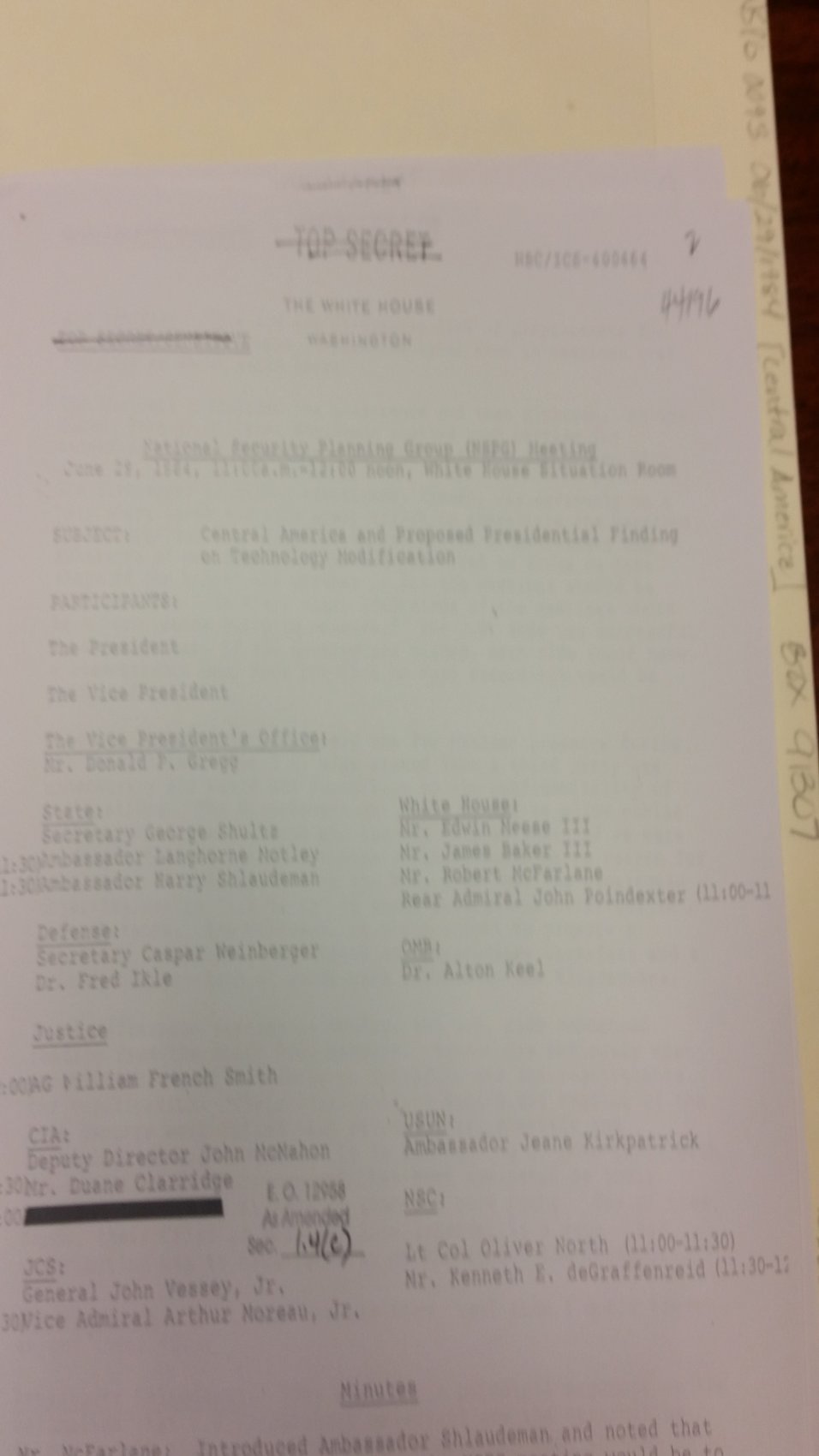
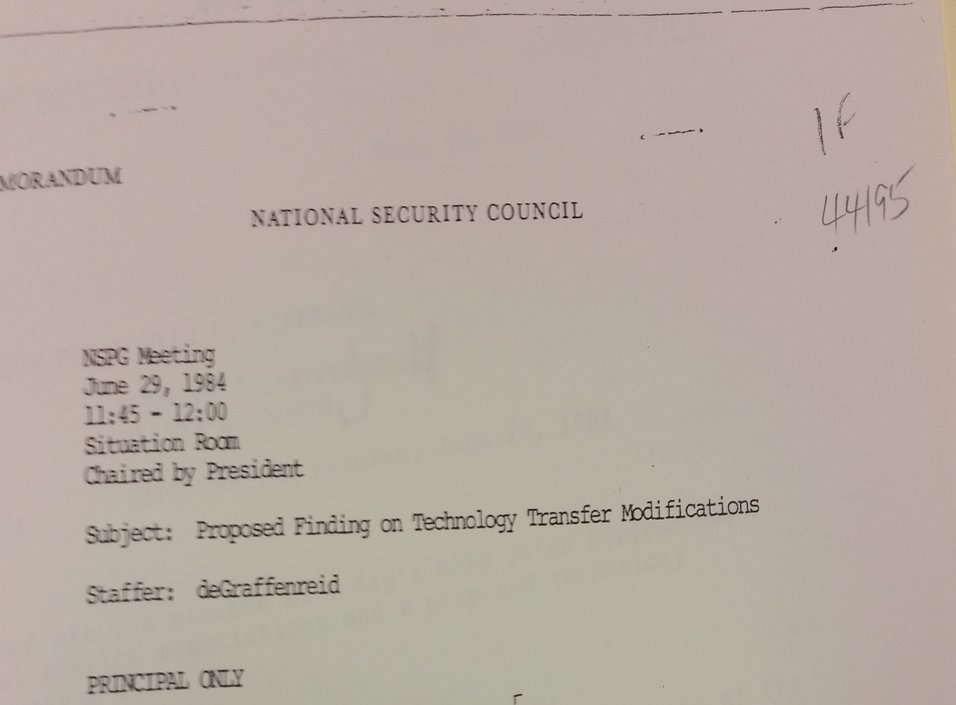
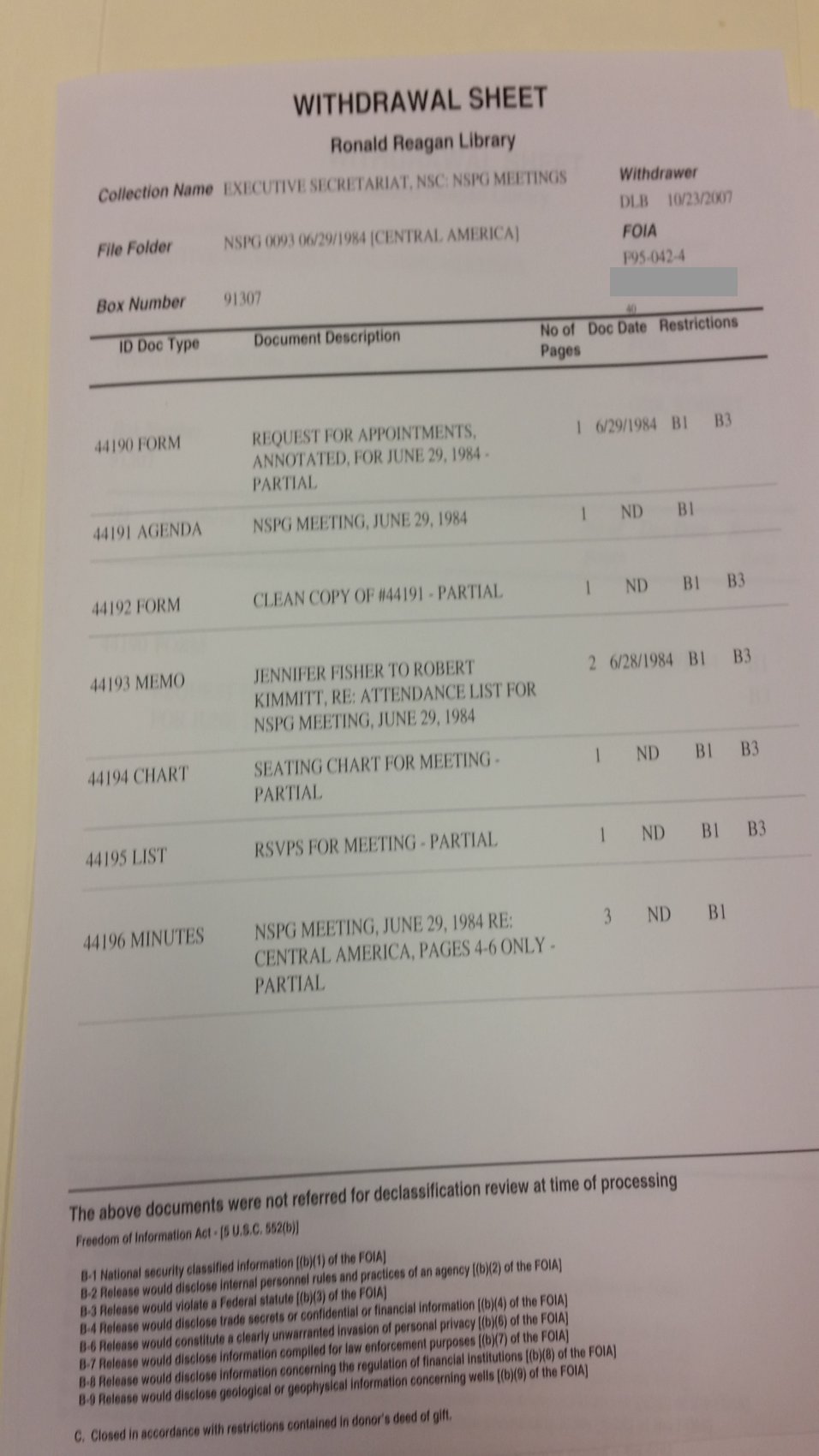
The record does three things for the story. It shows the government used the plan's own language: modifying technology bound for the Soviets. It shows the subject reached the President as a covert-action order, the form such a program would legally need. And it dates that order to 1984, two years after Weiss says the plan began.
It does not settle the dispute. It says nothing about the pipeline or any other result. The pages that say what the order authorized, and whether Reagan signed it, remain withheld.
What comes next
A mandatory declassification review request asks the library to review withheld pages for release. One would cover the agenda, the remaining minutes and the finding itself. Its status will be posted here once filed.